
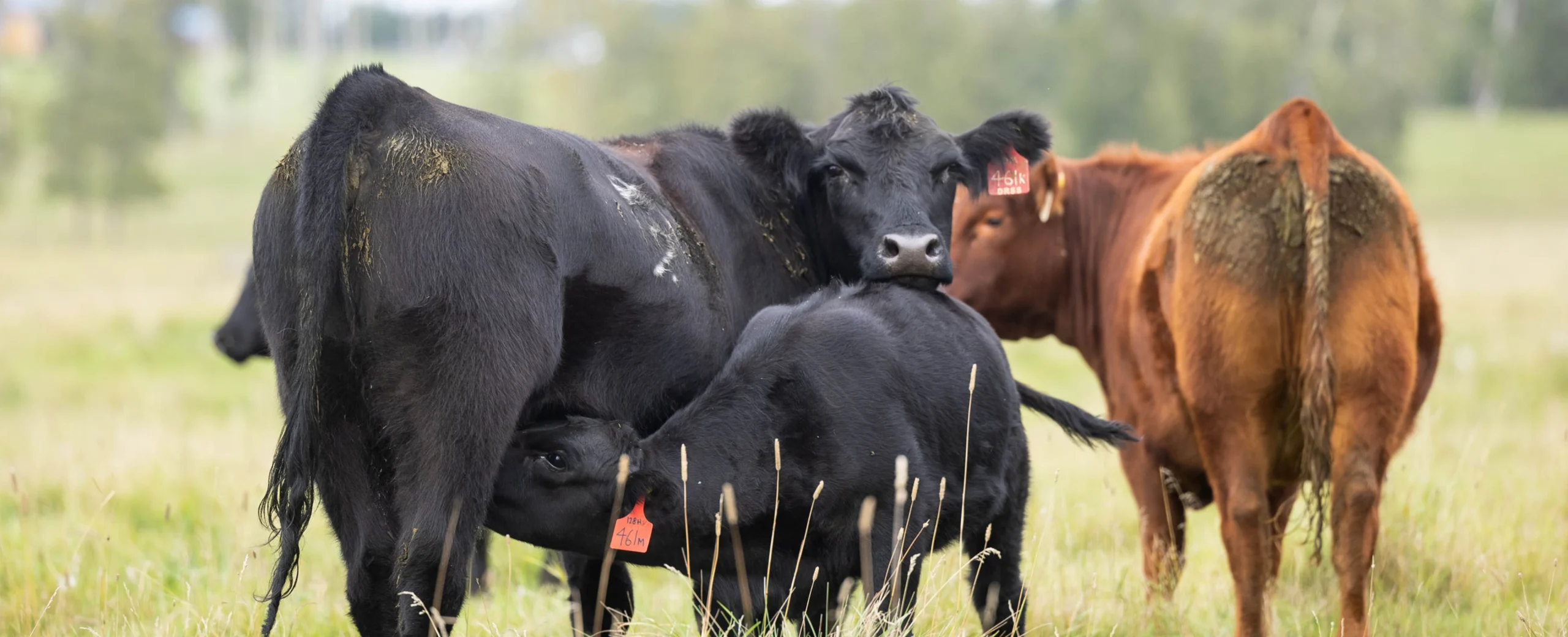
Creep feeding is the practice of providing nursing calves with the opportunity to eat feed that the cows cannot access. Typically, the main objective when creep feeding is to increase the growth rate of nursing calves, but at Dun Rite, we see the benefits going far beyond an increase in weight.
When you first start considering whether or not to implement creep feeding into your rotation, ask yourself what your main goal is. While creep feeding is commonly used to increase weight gain in weaned calves, it can also produce a more uniform crop, reduce weaning stress on calves, and allow young or thinner cows to enter the post-nursing period in better condition.
Creep Feeding at Dun Rite
At Dun Rite, calving begins around the first of March, with approximately 90 to 100 days before the calves are brought to summer pastures with fresh, young, rapid-growth forages. During those first 100 days, it is up to us to provide some level of supplementary feed to the young calves.
This can come from:
- Forages (like dry hay) in a creep area
- Pasture
- Grain mix
- Silage at the bunk
Without some type of dry feed, calves can start looking for feed beyond their mother’s milk. This can lead to calves eating along fence lines or licking into the mud and dirt, habits that can lead to digestive issues in young calves.
To mitigate this, creep feeding can be introduced. For young calves, it provides healthy nutrition, elevated protein, vitamins and chelated minerals (with a main component including Deccox to assist in coccidiosis control). Creep feeding also helps calves settle into eating faster at weaning. Calves that can start consuming 2% of their body weight in dry matter intake (DMI) at the bunk typically have fewer health issues in the pen.
Summer Pasture
Creep feeding takes a back seat once pairs are pushed to summer pasture. As calves go to grass, their feed intake decreases and they crave their mother’s milk and fresh pasture more. Early pasture is high in protein and highly digestible, perfect for young calves.
However, as pasture begins to decline, typically in mid to late July, pasture forages become hard and calves will be craving more nutrition. Creep feeding can then be reintroduced to help supplement what the pasture is lacking.
Benefits Outweighing the Cost
While weight gain is the main goal most people think of when first introducing creep feeding, the increase in gain ultimately depends on the quality of the creep feed offered and the number of days it is provided. It’s about more than creep feeding from birth to weaning. It’s about understanding seasonal changes and providing extra nutrition when it’s lacking.
The extra cost of creep feed can be a deterrent when deciding whether this process is right for you. With today’s calf values versus the current price of most commercial creep feeds, every producer knows that each pound of additional gain is worth it. We have seen creep feeding deliver that additional gain. Young calves have a tremendous ability to convert feed to gain very efficiently, and with healthier calves, the number of treatments at weaning is reduced, saving on drug costs. At Dun Rite, we believe the benefits that come with creep feeding definitely outweigh the extra cost.
This article was originally published in DRSS Insights, June 2025. Download the original PDF.
More From the Farm

Listen to the ABP Podcast Featuring Doug Roxburgh
Sep 22, 2026

Welcome Meghan Speed to the Dun Rite Team
Dec 1, 2025

Factors to Consider When Purchasing Bred Heifers
Oct 1, 2025